
Overview

Mammals & Small Cats of Ranthambore

Ranthambhore is home to an impressive diversity of mammals beyond the tiger and leopard — from rare small cats and scavengers to deer, antelopes, primates, and a rich community of smaller species that sustain the ecosystem.

Other Mammals: Small Cats

Ranthambhore is home to an impressive diversity of small cats. Five species have been recorded from the landscape. The rusty-spotted cat is one of the world's smallest wild cats and is extremely elusive. The Jungle Cat, although one of India's most widespread felids, occurs at relatively low densities in Ranthambhore because of the park's dry habitat. Camera-trap studies have also photographed the Asiatic Wildcat (Felis lybica ornata) in the more arid peripheral areas, highlighting the ecological transition between the forests of Ranthambhore and the Thar Desert.

A particularly remarkable record from the Forest Department's camera-trapping efforts was the photographic documentation of a Fishing Cat (Prionailurus viverrinus) near Berda in 2012. Although the species is not considered a resident of the landscape, this remains one of the most interesting mammal records from the region.

The Caracal (Caracal caracal) is one of India's rarest wild cats and one of the flagship species of the greater Ranthambhore landscape. Although its national population has always been small, eastern Rajasthan is believed to support one of the country's most important remaining populations. Over the past decade, the Tiger Watch research team has obtained numerous camera-trap photographs of Caracals, indicating that the species continues to survive across the landscape, particularly in the peripheral scrub forests and semi-arid habitats.

Locally known as Mor Todni or Mor Marni (the peacock killer), the Caracal is renowned for its remarkable hunting ability. Its diet includes hares, small birds, peafowl, rodents and occasionally young deer. With its long black ear tufts, powerful hind limbs and extraordinary leaping ability, the Caracal is one of the most specialised predators of India's dry grassland and scrub forests.
Wolves, Dhole, Jackals and Foxes

Although the core forests of Ranthambhore are not ideal wolf habitat, the surrounding open and semi-arid landscapes support a significant population of the Indian Wolf (Canis lupus pallipes). The wider region is considered important for the conservation of this highly adaptable predator.

The Dhole (Cuon alpinus) was once part of the Ranthambhore landscape and historical accounts suggest that it was once relatively abundant. However, its numbers declined over time, and the species was last recorded here in 2004. It is now considered locally extinct from the landscape.

The Golden Jackal (Canis aureus) is common in peripheral forests and agricultural landscapes, where it benefits from scavenging opportunities and smaller prey. Within the core tiger habitat, however, its numbers are comparatively lower, possibly due to competition with larger carnivores.

The Indian Fox or Bengal Fox (Vulpes bengalensis) inhabits open scrublands and grasslands around the reserve and occurs in suitable habitats. In the sandy landscapes towards the desert, the Desert Fox or White-footed Fox (Vulpes vulpes pusilla) occurs in place of the Bengal Fox. Its presence reflects the transition from dry deciduous forests to semi-desert habitats.

Striped Hyena

The Striped Hyena (Hyaena hyaena) is a nocturnal scavenger that inhabits the peripheral forests, scrublands and open landscapes surrounding Ranthambhore. It is the only hyena species found in India and plays an important ecological role by removing carcasses from the landscape. Its exceptionally powerful jaws can crush large bones, allowing it to consume parts of carcasses that few other predators can utilise. Although daytime encounters are uncommon, patient and fortunate visitors may occasionally spot a hyena crossing a forest track around dawn or dusk. Tigers occasionally attack and kill hyenas, illustrating the intense competition between these two carnivores.

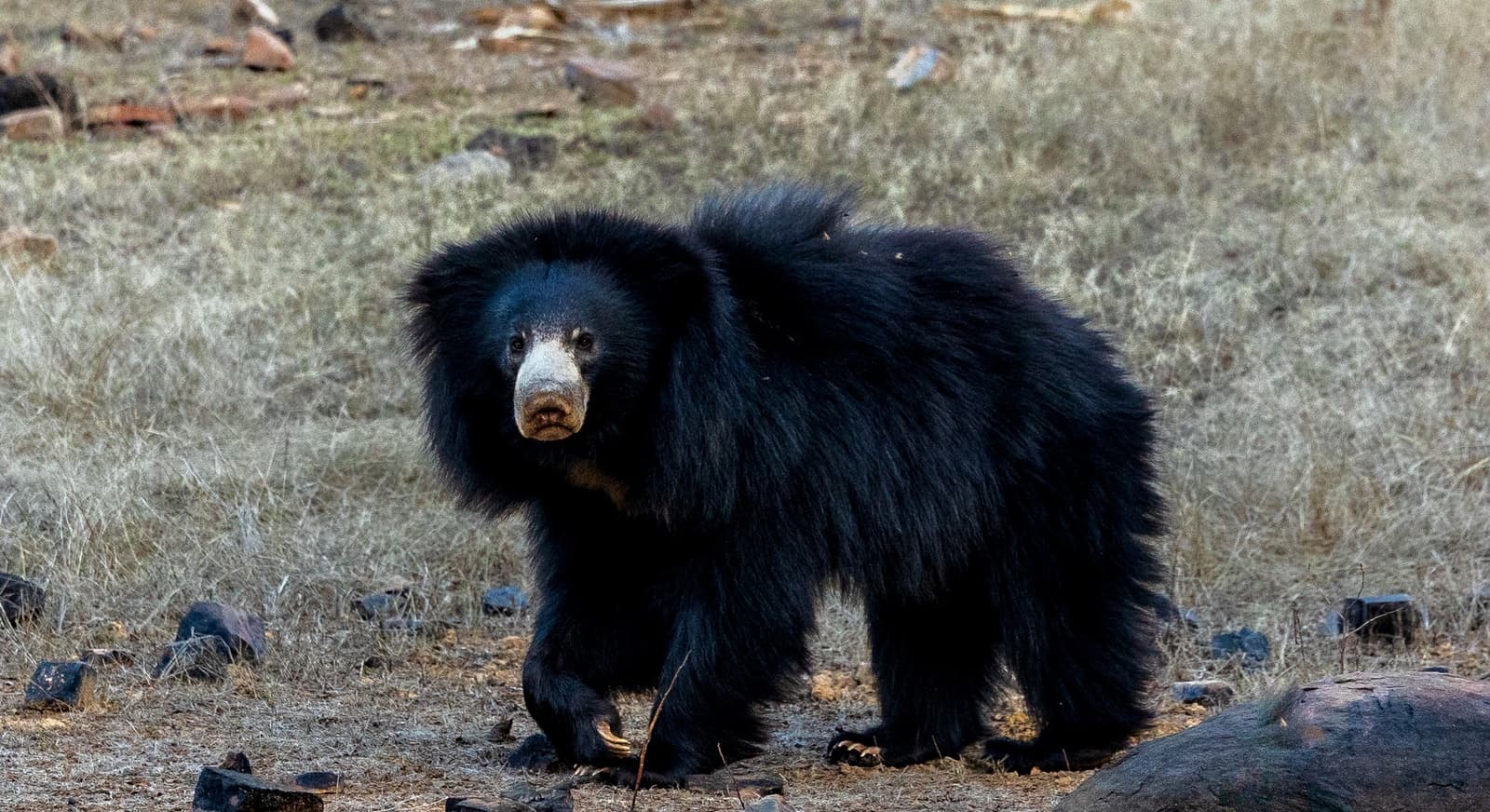
Sloth bear in Ranthambhore forest

Sloth Bear

The Sloth Bear is Ranthambhore's third most sought-after mammal after the tiger and leopard. Over the past two decades, its population has shown a steady increase, making Ranthambhore one of the finest places in India to observe this unique species in the wild.

Sloth Bears are omnivorous, feeding on a wide variety of foods throughout the year. Termites, ants, beetles and other insects form an important part of their diet, while seasonal fruits such as ber (Ziziphus spp.), tendu (Diospyros melanoxylon), and the pods of the golden shower tree (Cassia fistula) are equally important. Their highly adaptable feeding habits allow them to exploit a wide range of habitats and food resources.

Ranthambhore supports a good population of Sloth Bears. Unlike tigers, which primarily occupy the more productive core habitats and use only about sixty percent of the landscape, Sloth Bears are found throughout the reserve, including rugged hills, rocky valleys, dry forests and peripheral areas. In this respect, their habitat use is more comparable to that of leopards.

Interactions between Sloth Bears and tigers are among the most dramatic wildlife spectacles in Ranthambhore. Despite being considerably smaller, Sloth Bears are exceptionally fearless and have often been observed charging at tigers, forcing them to retreat. However, these encounters do not always favour the bear. Adult male tigers occasionally kill and feed on Sloth Bears, and several such incidents have been documented through photographs and video recordings from Ranthambhore.

Deer of Ranthambhore

Two species of deer dominate the forests of Ranthambhore — the Sambar Deer (Rusa unicolor) and the Chital or Spotted Deer (Axis axis). Together they form the principal prey base for the park's large carnivores and play a vital role in maintaining the ecological balance of the ecosystem.

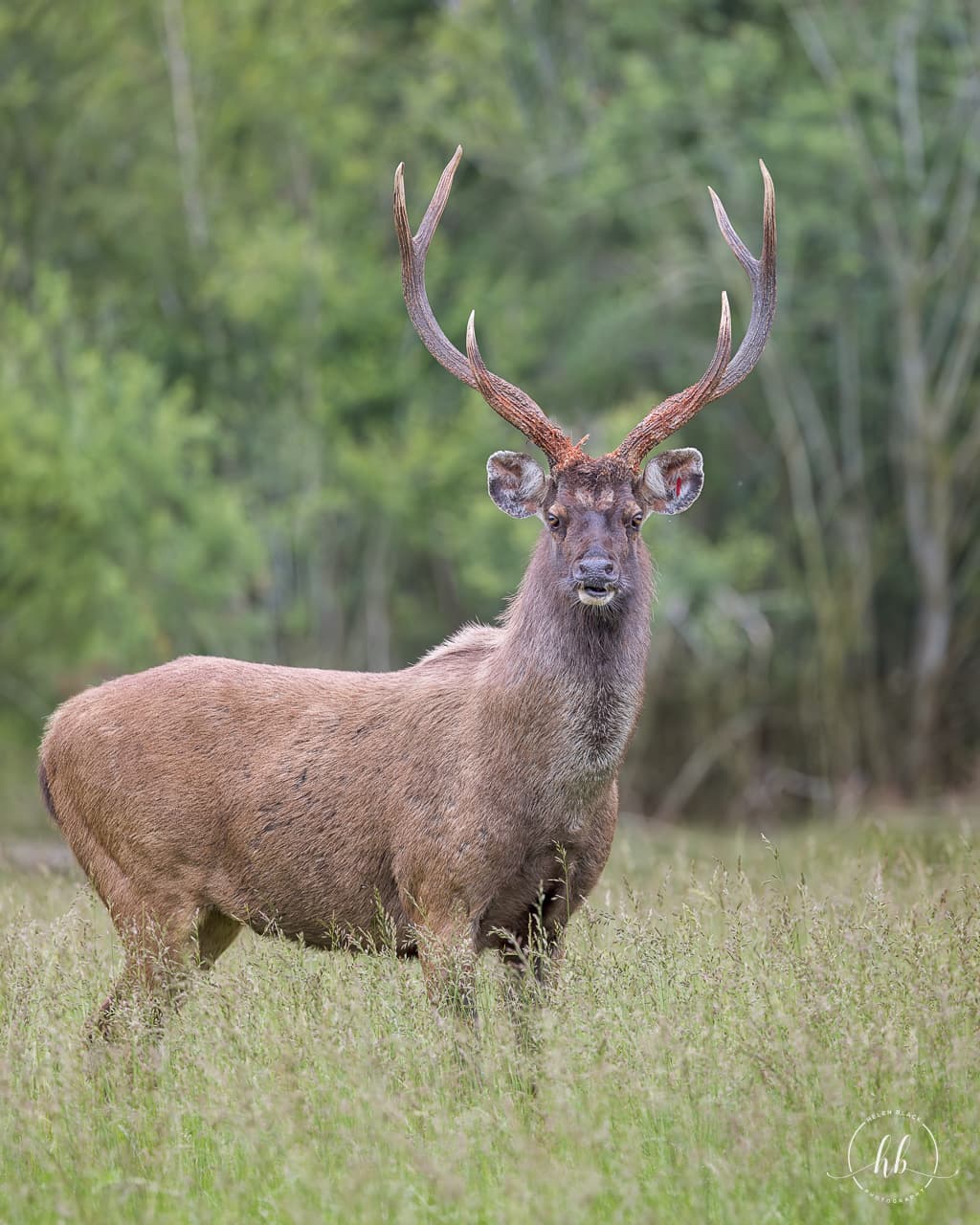
The sambar is the largest deer species in Asia and one of the signature animals of Ranthambhore. Widely distributed across South and Southeast Asia, it thrives in the park's rugged woodlands, rocky escarpments, and forested valleys. During the hotter months, sambar are frequently seen around lakes, streams, and waterholes, where they find both food and refuge. Powerfully built and highly alert, sambar are formidable animals capable of defending themselves against predators. Mature males carry large branching antlers, while females are naturally antlerless. Tigers are often seen stalking, chasing, and hunting sambar, making these encounters some of the most memorable wildlife sightings in the reserve. Female sambar usually remain in small family groups with their young. Adult stags are often solitary or occur in loose groups.

The Chital is the most abundant and elegant deer of Ranthambhore. Recognised by its rich chestnut coat covered with distinctive white spots, it is among the most beautiful deer species in Asia. Like the Sambar, only males possess antlers, which are shed and regrown annually. Females do not grow antlers because their nutritional resources are invested in reproduction and raising offspring. Chital are highly social animals and usually occur in herds that are much larger than those of Sambars. During the monsoon, when food is plentiful, these herds may merge into impressive congregations across the grasslands and open forests. Constantly alert to predators, Chital rely on their keen eyesight, hearing and alarm calls to warn other animals of approaching danger.

Sambar deer in Ranthambhore woodland

Antelopes of Ranthambhore

Ranthambhore supports two species of antelope — the Nilgai (Boselaphus tragocamelus), locally known as Rojhda, and the Chinkara (Gazella bennettii), the State Animal of Rajasthan.

The Nilgai is Asia's largest antelope and one of the most impressive herbivores found in the reserve. Adult males may be nearly twice the size of females and are easily recognised by their bluish-grey to slate-black coat, while females and young animals are light brown. Unlike deer, antelopes possess permanent horns rather than antlers. Male Nilgai bear short, straight horns throughout their lives, whereas females are hornless.

The graceful Chinkara inhabits the drier and more open habitats around Ranthambhore, particularly in scrub forests and peripheral grasslands. Both males and females possess slender, ringed horns, although those of males are generally longer and more robust. Unlike the antlers of deer, the horns of Chinkara are permanent structures and are never shed. Their exceptional speed, agility and ability to survive in arid environments make them one of Rajasthan's most iconic mammals.

Primates

The Northern Plains Grey Langur (Semnopithecus entellus) is the most commonly encountered primate in Ranthambhore. Easily recognised by its long tail, black face and silver-grey coat, this species lives in large social groups consisting of one dominant male, multiple females and their offspring. Groups of bachelor males are also frequently observed. Langurs are an integral part of the forest ecosystem. Their alarm calls provide an early warning system for deer and other wildlife whenever predators such as tigers or leopards approach.

The Rhesus Macaque (Macaca mulatta) is comparatively uncommon within the reserve. Small populations occasionally occur near temples, villages and tourist areas. More aggressive than langurs, macaques compete for food and space, and interactions between the two primate species are generally limited. Both langurs and macaques occasionally fall prey to leopards, demonstrating their important place in Ranthambhore's complex food web.

Other Mammals

Beyond its iconic large mammals, Ranthambhore supports an impressive diversity of smaller mammals that contribute significantly to the functioning of the ecosystem. Although many of these species are seldom seen during safaris, they play essential ecological roles as herbivores, insectivores, scavengers and predators.

Indian Hare: The Indian Hare (Lepus nigricollis) is common throughout Ranthambhore, particularly in open scrub forests, grasslands and woodland edges. Primarily nocturnal, it is an important prey species for leopards, jackals, foxes and several birds of prey.

Honey Badger: The Honey Badger (Mellivora capensis), also known as the Ratel, is one of Ranthambhore's most elusive carnivores. Although camera-traps have photographed the species at several locations across the reserve, sightings during safaris are exceptionally rare. Even visitors who undertake hundreds of safaris may never encounter one in the wild. Renowned for its strength, intelligence and fearless temperament, the Honey Badger feeds on insects, reptiles, rodents, birds, honey, and a wide variety of small vertebrates.

Civets: Two species of civets occur in Ranthambhore: the Small Indian Civet (Viverricula indica) and the Asian Palm Civet (Paradoxurus hermaphroditus). Both species are widespread but strictly nocturnal, making daytime sightings extremely uncommon. These secretive mammals play an important ecological role by dispersing seeds through their fruit-rich diet while also controlling populations of insects and small vertebrates.

Hedgehogs: Two species of hedgehogs have been recorded from the Ranthambhore landscape. Both are nocturnal and rarely encountered. The Long-eared Hedgehog (Hemiechinus collaris) is occasionally seen crossing roads at night, while the Indian Hedgehog (Paraechinus micropus) has also been documented from the region.

Rodents: Approximately fifteen species of rodents have been documented from Ranthambhore. They play a vital role in maintaining the health of the ecosystem. Although most are small and seldom noticed during a safari, they are among the reserve's most abundant mammals.

Bats: Ranthambhore supports an exceptionally rich bat fauna, with approximately 17 recorded species. These include three species of fruit bats and 14 species of insectivorous bats. The Indian Flying Fox (Pteropus medius) forms large daytime roosts, particularly around Rajbag Lake, where hundreds or even thousands of individuals can be seen hanging from large banyan trees. The ancient Ranthambhore Fort, with its numerous caves, tunnels and abandoned structures, provides ideal roosting sites for several species of insectivorous bats.