
Overview

Birds of Ranthambore

With 355 recorded bird species, Ranthambhore and its adjoining landscapes are among the finest birdwatching destinations in northern India. Approximately 200 species are resident breeders, around 125 are winter migrants, nearly 20 are summer migrants that arrive mainly to breed, and nine occur as passage migrants during their seasonal journeys. Even on a single safari, it is possible to record 50 bird species, although the composition varies considerably with the season.

Resident Birds

Even resident birds may undertake seasonal movements within the landscape in response to food availability and breeding requirements. Among the reserve's most sought-after birds are its owls. The majestic Brown Fish Owl and Dusky Eagle-Owl are among Ranthambhore's signature species, while the Spotted Owlet and Indian Scops Owl are frequently encountered in drier habitats.

Ranthambhore is equally rewarding for raptor enthusiasts. The Crested Serpent Eagle is one of the most frequently observed birds of prey, often seen perched near lakes and streams, scanning for snakes and other reptiles. These birds become particularly conspicuous between February and April, when they disperse across the reserve. The Oriental Honey Buzzard is another commonly seen raptor, especially during the warmer months when it searches for bee and wasp nests.

Some of the birds most frequently encountered during safaris include the Rufous Treepie, Jungle Babbler, Large Grey Babbler, Rose-ringed Parakeet, Yellow-footed Green Pigeon, Black Drongo, and numerous species of kingfishers, woodpeckers, shrikes, and flycatchers.

One of the ecological changes in recent decades has been the establishment of breeding colonies of storks, herons, cormorants, darters, ibises, spoonbills and egrets on islands within Rajbag and Padam lakes. These colonies were either absent or extremely small in the past. Their expansion reflects improved wetland stability, reliable water availability, and the long-term recovery of Ranthambhore's aquatic ecosystems.
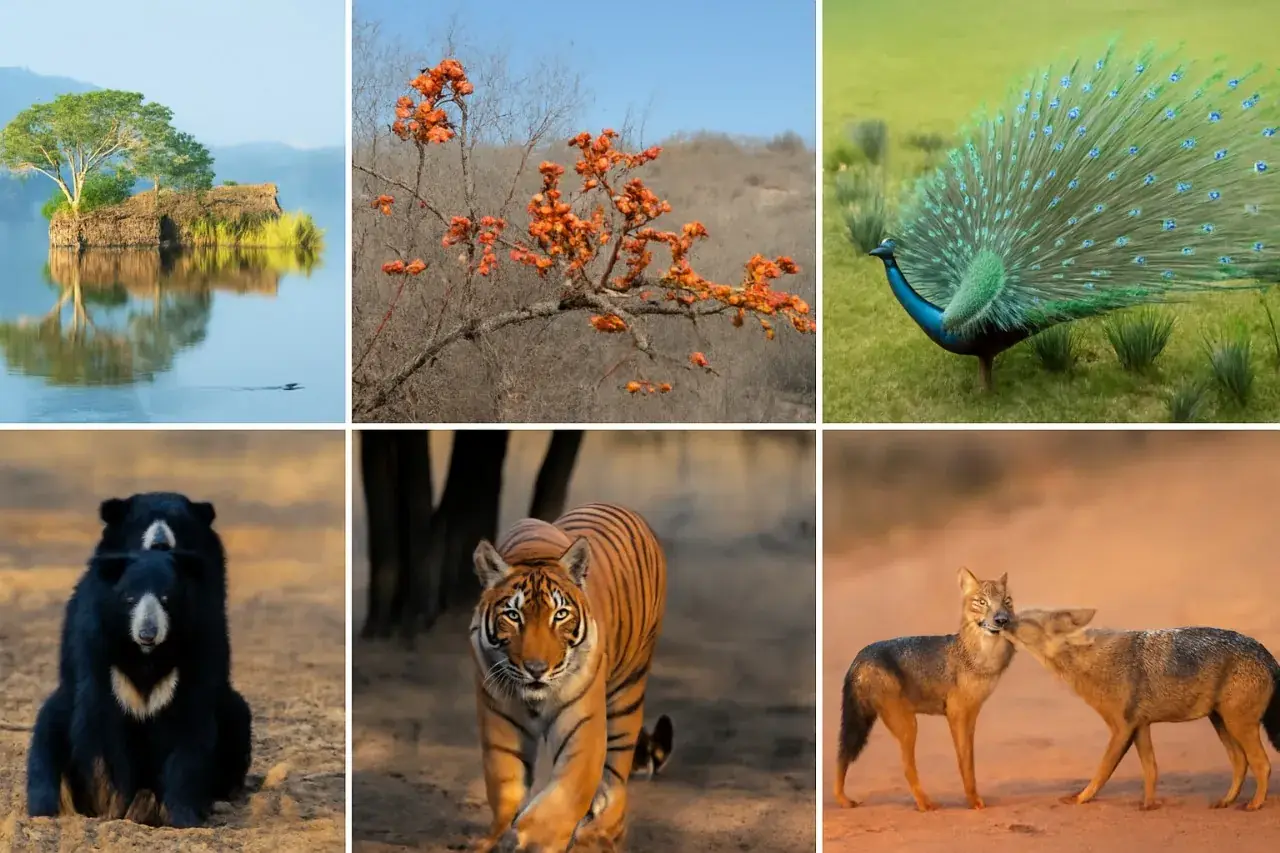
Birdlife around Ranthambhore wetlands

Winter Migrants

Most winter migrants arrive from Central Asia, Siberia, and Europe, escaping harsh northern winters. Ducks, geese, waders, gulls, warblers, pipits, larks, wagtails, and large flocks of Rosy Starlings are among the characteristic winter visitors. In recent years, however, the number of wintering waterfowl has declined. Several factors may have contributed to this trend, including the availability of more wetlands outside the reserve, changes in aquatic vegetation, and the increasing population of Marsh Crocodiles, which may influence the suitability of some lakes for waterbirds.

Among the most fascinating winter visitors is the Short-eared Owl, which has never been seen by tourists but was recorded once after a fire swept through a grassland on a hilltop. It spends the day concealed in grasslands and open plateaus. Winter is also the best season to observe several species of ducks, raptors, and small insectivorous birds, making it the most rewarding period for birdwatchers.

Summer Migrants

Summer transforms Ranthambhore into an excellent destination for woodland birds. Many species migrate from southern India or neighbouring regions to breed in the reserve's dry deciduous forests. Among the most colourful visitors are the Indian Golden Oriole and the elegant Asian Paradise Flycatcher, both of which become highly conspicuous during the breeding season.

Several cuckoos arrive with the onset of summer, including the Common Cuckoo, Grey-bellied Cuckoo, Large Hawk-Cuckoo, Jacobin Cuckoo, and Asian Koel, filling the forests with their distinctive calls. The Black-headed Cuckooshrike, although not a cuckoo, is another characteristic summer breeding bird. The Chestnut-tailed Starling breeds in Ranthambhore during the summer months, while the Jungle Nightjar is frequently encountered resting quietly on tree branches or forest tracks during the day.

Perhaps the most celebrated summer migrant is the Indian Pitta, whose brilliant plumage and unmistakable two-note whistle are among the characteristic sounds of the pre-monsoon forest. During the breeding season, its calls echo throughout the reserve, making it one of Ranthambhore's most iconic seasonal birds. Other regular summer visitors include the Asian Brown Flycatcher, whose numbers increase before the arrival of the monsoon.

Passage Migrants

A small number of bird species use Ranthambhore as a temporary stopover during their long migratory journeys. The European Roller is one of the most regular passage migrants, appearing briefly before continuing southwards. In the scrublands surrounding the reserve, birdwatchers may occasionally encounter the Rufous-tailed Scrub Robin, although it has become less common in recent years.

Another notable passage migrant is the Eurasian Hobby, a small falcon that passes through the reserve after the monsoon while travelling between its breeding and wintering grounds. These seasonal visitors add yet another dimension to Ranthambhore's remarkable birdlife, ensuring that birdwatching remains rewarding throughout the year. Whether visiting in winter, summer, or the monsoon, the reserve always offers something new for keen birdwatchers to discover.