Overview

History of Ranthambore

Ranthambhore is an ancient landscape, with the surrounding hills preserving evidence of prehistoric human occupation in the form of rock art. Over the centuries, Ranthambhore has been closely associated with many of India's most renowned rulers and historical figures.

An Ancient Landscape

Although the Aravalli Hills are generally not considered conducive to prehistoric rock art, more than 20 rock art sites have been discovered in the Vindhyan hill system of the Kailadevi forests of Ranthambhore Tiger Reserve under the leadership of Dr. Dharmendra Khandal. Ranthambhore itself has only one known rock art site, at Kukraj Ghati, which appears to date from the historic period.

Hammir Dev Chauhan, Iltutmish, Razia Sultan, Alauddin Khalji, Rana Sanga, Sher Shah Suri, Emperor Akbar, Jahangir, Shah Jahan, and Sawai Man Singh, among others, visited or were closely connected with Ranthambhore and played significant roles in shaping its history during different periods.

The Origin of the Name Ranthambhore

The name Ranthambhore has been in use for at least 800 years. Its earliest known form was Ranastambhapur, which gradually evolved into Ranthambhore. Derived from Sanskrit, Ranastambhapur is generally interpreted as "The City of the Battle Post" or "The City of the War Pillar."

The earliest known inscription mentioning Ranastambhapur was discovered at Manglana, near Ajmer, on a stepwell (baori) built by a local Dadhich Brahmin. Dating to AD 1215, it is followed by a second inscription bearing the same name, found at the ancient Kawalji temple near Ranthambhore and dated AD 1288. Together, these inscriptions provide the earliest epigraphic evidence for the name from which modern Ranthambhore evolved.

A Fortress Protected by Nature

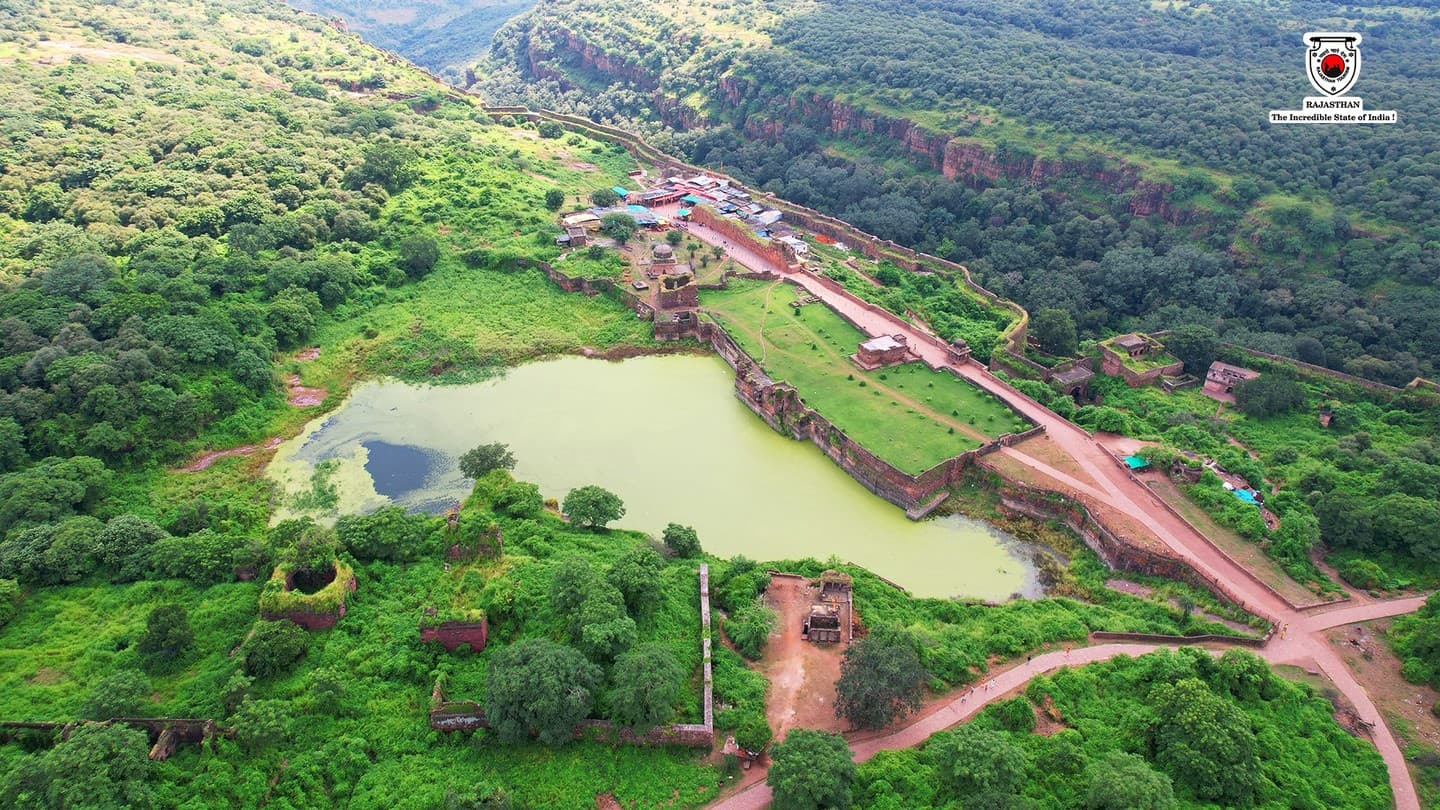
Unlike many medieval forts that relied solely on massive walls, Ranthambhore was naturally fortified by an extraordinary landscape. The fort stands atop a steep Aravalli plateau, giving it commanding views over the surrounding forests and plains. Several rivers formed additional natural barriers around the region. The mighty Chambal River flows to the south, the Banas River lies to the north and east, while the Galva and Chakal rivers protect the western approaches. The Vindhyan hills guard the southwest. These formidable natural defences made the fort exceptionally difficult to attack, forcing invading armies to undertake long and exhausting sieges. Whoever controlled Ranthambhore controlled an important gateway linking Delhi, Malwa, and western India.

Ranthambhore Fort rising above the forest

Origins of Ranthambhore Fort

The exact date of construction of Ranthambhore Fort remains uncertain, and historians have proposed several theories based on archaeological evidence, inscriptions and historical literature.

According to the Archaeological Survey (Jaipur Circle), the fort was originally built by the Yadav king Jayant during the 5th century AD, and his descendants ruled here until the Chauhans conquered the region in the 12th century. Hooton Begue (1902), however, suggests that construction probably began around 944 AD under a ruler of Sapadalaksha, an ancient territorial division that covered parts of present-day Rajasthan.

Another important source is the Manglana stone inscription near Ajmer. It records that following the Second Battle of Tarain (1192 AD), Govindraj Chauhan, a descendant of Prithviraj Chauhan, established himself at Ranthambhore and became the first Chauhan ruler of the fort. Medieval literary works such as Hammir Raso, written by Kavi Jodhraj and Kavi Mahesh, attribute construction of the fort to Jaitra (Jaitra Singh) under the blessings of Padmavati, dating its construction to around 1053 AD.

Though historians differ regarding its exact origin, all agree that by the 12th century Ranthambhore had become one of northern India's strongest and most strategically significant hill forts.

The Changing Fortunes of Ranthambhore

Because of its strategic importance, Ranthambhore repeatedly became the focus of military campaigns by Rajput rulers, the Delhi Sultanate, the Mughals and neighbouring kingdoms. Few forts in India have witnessed so many prolonged sieges and changes of power. The Chauhan rulers transformed Ranthambhore into a major Rajput stronghold. During the reign of Rao Hammir Dev Chauhan, the fort achieved its greatest fame by resisting repeated invasions from the Delhi Sultanate.

In 1301 AD, Alauddin Khilji launched a massive campaign against the fort. After a prolonged siege, Ranthambhore finally fell, marking the end of Chauhan rule. Over the following centuries, control of the fortress passed through several powerful dynasties, including the rulers of Mewar, the Hada Rajputs of Bundi, the Sultan of Gujarat, the Mughal Empire, and finally the Kachhwaha rulers of Jaipur.

Among the Mughal emperors, Akbar captured Ranthambhore in 1569 after a month-long siege. Rao Surjan Hada of Bundi eventually surrendered the fort, reportedly after negotiating favourable terms that allowed him to retain his honour and dignity. Akbar's successor Jahangir also camped at Ranthambhore during 1618, reflecting the continued strategic importance of the fortress.

In the 17th century, Ranthambhore Fort passed into the hands of the Kachhwaha rulers of Amber. It later became part of Jaipur State and remained under Jaipur until Indian Independence. Following the integration of princely states, Jaipur acceded to the Indian Union in 1949, and Ranthambhore became part of the newly formed state of Rajasthan in 1950.

How to Visit Ranthambhore Fort

Visiting hours: The fort is open from sunrise to sunset. Plan your visit during daylight and avoid very early morning or late-evening visits.

Stay on trails: Remain on designated paths and avoid isolated, dense or overgrown areas. For exploring less-visited sections, an authorised local guide is recommended.

Do not feed wildlife: Feeding animals is strictly prohibited. Langurs are accustomed to visitors and may snatch food, bags or other belongings. Keep valuables secure and do not carry food openly.

Sunset restriction: The access road passes through the Tiger Reserve, so all visitors must leave the forest area before sunset. An early start is recommended to allow sufficient time for exploration.

Protected heritage: Ranthambhore Fort is a UNESCO World Heritage Site protected by the Archaeological Survey of India (ASI), while the surrounding forest and land form part of Ranthambhore Tiger Reserve, managed by the Rajasthan Forest Department. Visitors must follow the regulations of both authorities.

Transport: Private taxis registered in Sawai Madhopur district can transport visitors to the fort. Local taxis are also available at the park main gate.

The Legend — Lady of the Lakes (1997–2016)

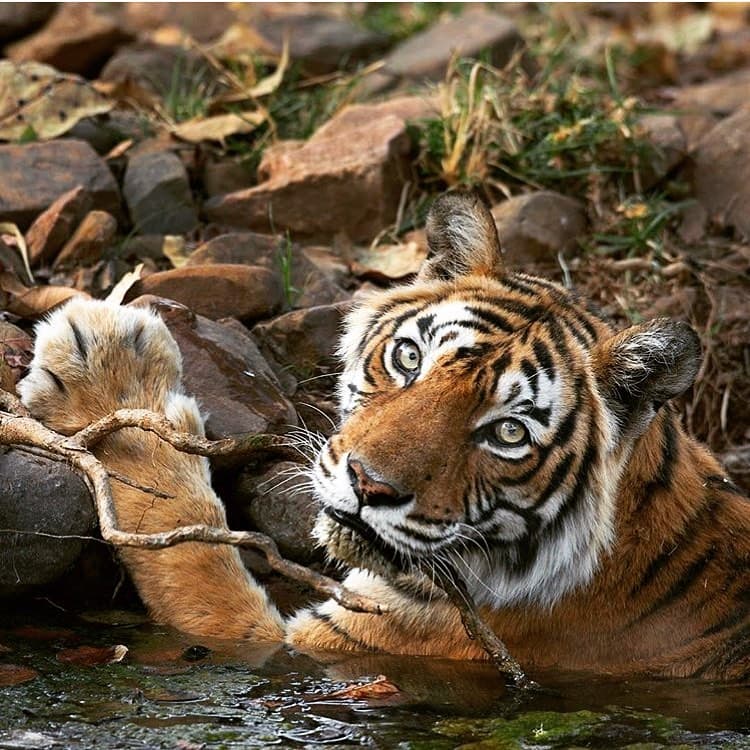
No account of Ranthambhore's history is complete without Machhli. Born around 1997, she lived to the remarkable age of 19 and became the most photographed tiger in the world. Her fearless, bold personality and striking beauty brought Ranthambhore into the international spotlight and inspired a generation of wildlife photographers and conservationists.

Often called the Lady of the Lakes, Machhli remains the soul of Ranthambhore's modern story — and a bridge between the fort's ancient landscape and today's living tiger dynasty.

The legendary tigress Machhli at Ranthambore