
Royal Hunting Grounds
Much of present-day Ranthambhore served as the royal hunting grounds of the former Jaipur State. Although parts of the forest were protected as game reserves, numerous villages were seated within the landscape.
Overview
Much of present-day Ranthambhore served as the royal hunting grounds of the former Jaipur State. Although parts of the forest were protected as game reserves, numerous villages were seated within the landscape.
The forests surrounding Ranthambhore Fort were notified as the Sawai Madhopur Wildlife Sanctuary, providing the first formal legal protection to the area's rich wildlife and forests.
During her visit to India, Queen Elizabeth II participated in a tiger hunt at Ranthambhore. The event symbolised the end of the royal hunting era. Within a decade, India's conservation philosophy shifted from hunting wildlife to protecting it.
Following recommendations by Kailash Sankhala and the adoption of IUCN Resolution GA 1969 RES 015 at the IUCN General Assembly held in New Delhi, India imposed a nationwide moratorium on tiger hunting. This landmark decision paved the way for modern tiger conservation.
Ranthambhore became one of the original nine Tiger Reserves established under Project Tiger, marking the beginning of modern tiger conservation in the landscape.
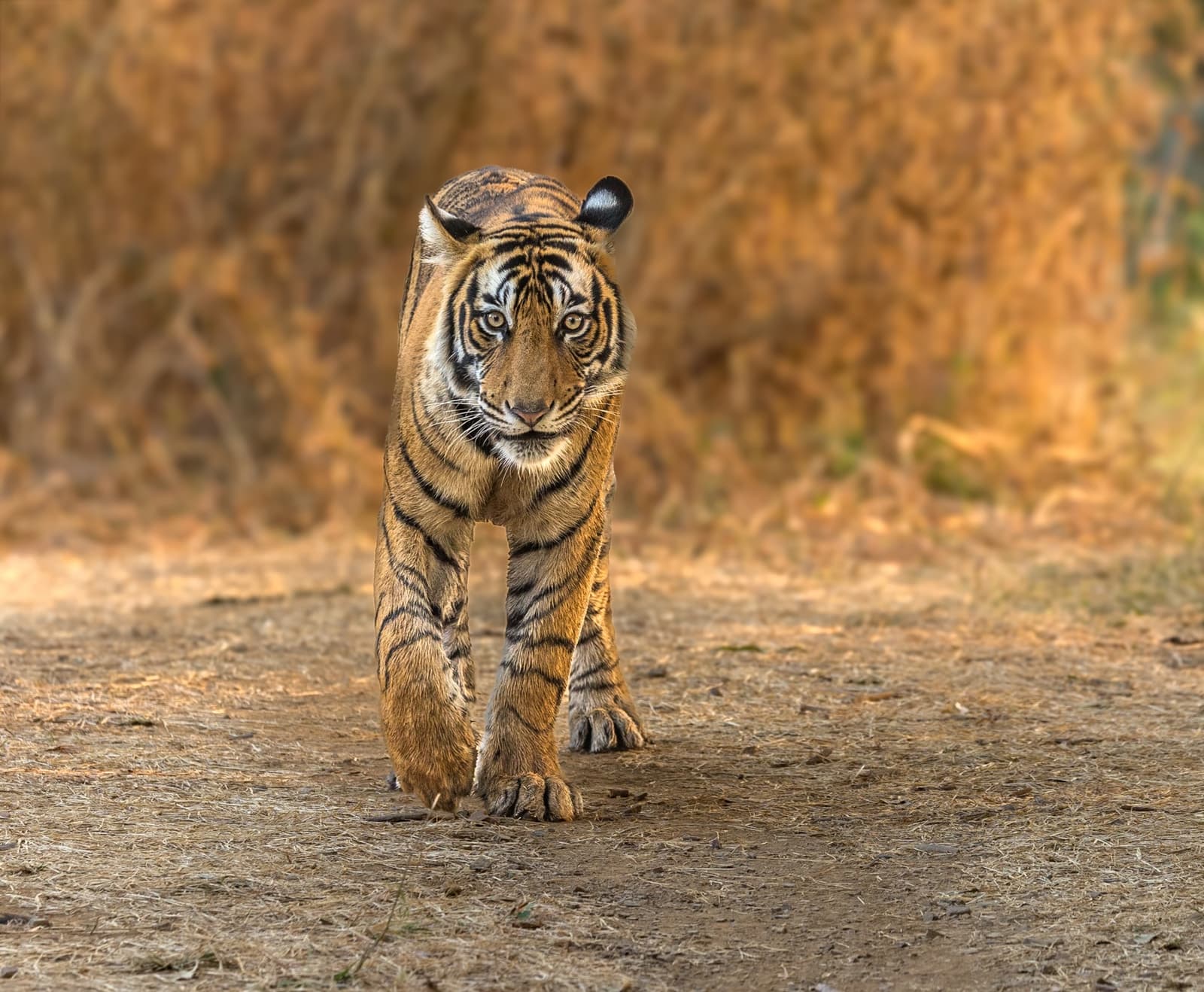
Under the leadership of Shri Fateh Singh Rathore, twelve villages were voluntarily relocated from the core area of the reserve. Thousands of hectares of forests, grasslands, and wetlands regenerated naturally, creating ideal habitat for tigers and numerous other wildlife species.
The 282 sq. km core area of the Tiger Reserve was notified as Ranthambhore National Park, providing the highest level of legal protection available for wildlife in India and establishing the core breeding habitat for tigers.
Improved protection and habitat restoration resulted in a remarkable behavioural change in tigers. Animals that had once remained elusive became increasingly active during daylight hours, making Ranthambhore one of the world's finest places to observe wild tigers. During this period, influential books by Fateh Singh Rathore and Valmik Thapar introduced Ranthambhore to wildlife enthusiasts across the world.
Former Prime Minister Rajiv Gandhi spent a six-day private holiday in Ranthambhore during the New Year of 1985–86. Extensive national media coverage brought the reserve into the public spotlight and greatly increased its popularity as a wildlife tourism destination.
Valmik Thapar founded the Ranthambhore Foundation, one of India's pioneering community-based conservation organisations. Working with villages around the reserve, the Foundation promoted environmental education, women's empowerment, sustainable livelihoods, and habitat conservation, demonstrating that wildlife conservation and community development can go hand in hand.
A wave of organised tiger poaching exposed serious weaknesses in wildlife protection. This became one of the darkest periods in Ranthambhore's conservation history and prompted renewed efforts to strengthen protection.
Conservationist Dr. Goverdhan Singh Rathore expanded community-based conservation programmes around Ranthambhore through his NGO, Prakratik Society. His efforts helped build local support for wildlife conservation and pioneered a people-centred approach to conservation in the landscape.
Under the leadership of Dr. G. V. Reddy, the Rajasthan Forest Department strengthened anti-grazing measures, field protection, and wildlife monitoring, contributing to the gradual recovery of the tiger population.
Tiger Watch was founded by Fateh Singh Rathore and Ashutosh Mahadevia to strengthen wildlife conservation through research, anti-poaching, community participation, and conservation education. The organisation later pioneered rehabilitation programmes for traditional hunting communities and became a key partner in protecting the Greater Ranthambhore Landscape.
Tiger Watch documented a renewed decline in Ranthambhore's tiger population and warned of organised poaching. The disappearance of all tigers from Sariska Tiger Reserve in 2005 confirmed that wildlife crime had become a serious threat across Northern India. The disappearance of tigers from Sariska was reported by Indian Express journalist Jay Mazoomdaar.
Under the guidance of Shri Fateh Singh Rathore, Tiger Watch launched Ranthambhore's most iconic anti-poaching programmes. Led in the field by Dr. Dharmendra Khandal, and working closely with the Rajasthan Forest Department and Rajasthan Police, several organised poaching networks were dismantled.
As tiger numbers recovered, the Rajasthan Forest Department extended effective protection into the outer areas of the national park and the adjoining Sawai Mansingh Wildlife Sanctuary. Tourism Zones 6–10 were opened, making nearly 150 sq. km of additional habitat available for dispersing tigers while distributing tourism pressure more evenly across the reserve.
Ranthambhore became the source population for India's first successful tiger reintroduction programme. Tigers from Ranthambhore were translocated to Sariska Tiger Reserve, restoring a population that had been lost to poaching.
Under the leadership of Shri Y. K. Sahu, five additional villages were voluntarily relocated from within the reserve. These relocations further expanded undisturbed habitat and strengthened ecological connectivity.
The conservation success of Ranthambhore inspired the establishment of Mukundra Hills Tiger Reserve, Ramgarh Vishdhari Tiger Reserve, and Dholpur-Karauli Tiger Reserve. Together, these reserves now form the Greater Ranthambhore Landscape, an interconnected conservation area covering nearly 5,000 sq. km across eastern Rajasthan.
From a former royal hunting ground to one of the world's most celebrated tiger landscapes, Ranthambhore has become one of India's greatest conservation success stories. Built on scientific management, habitat restoration, community participation, and strong protection, it continues to inspire tiger conservation across the country.