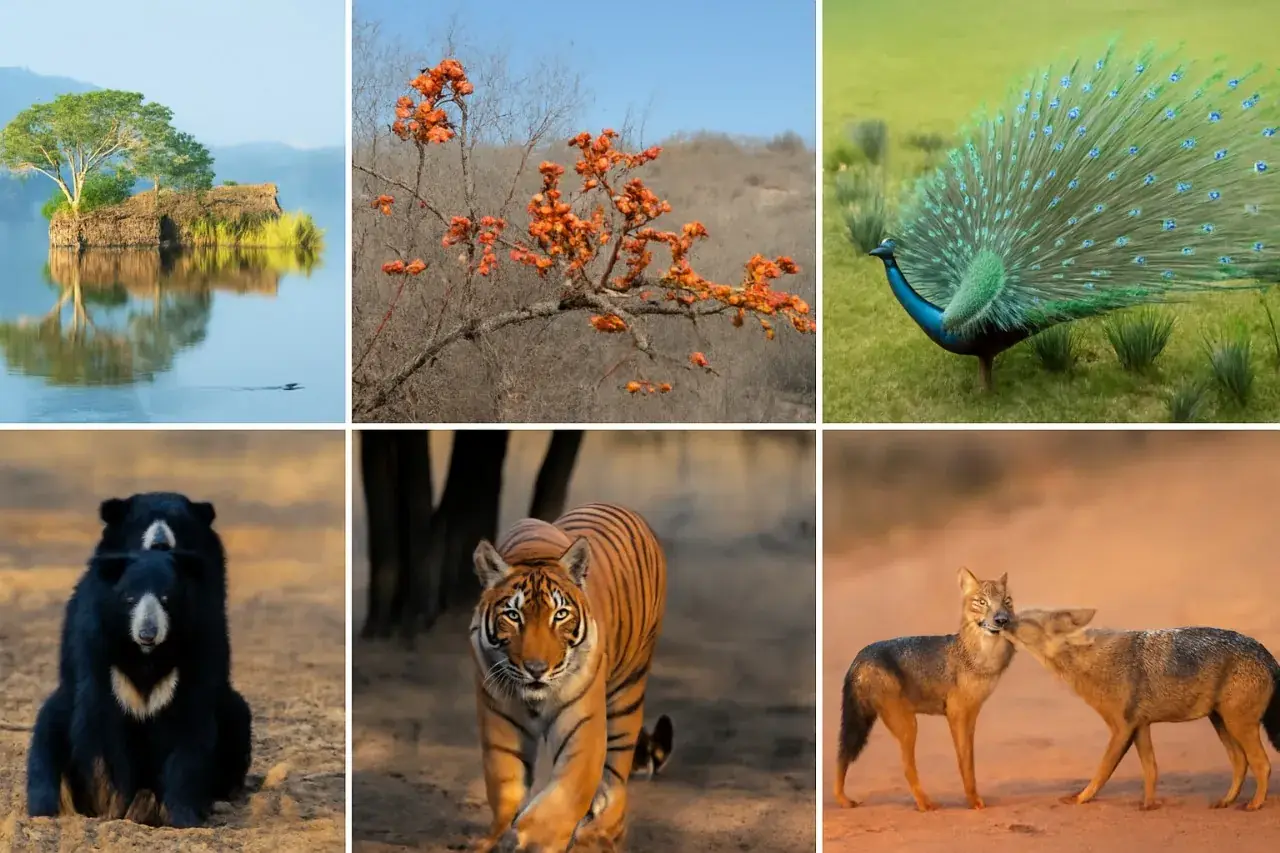
Biodiversity of Ranthambore

Ranthambhore Tiger Reserve and its surrounding landscapes harbour remarkable biodiversity. Here is a glimpse of the rich variety of life found across this landscape — alongside the flora and fauna species guides visitors use before safari.

Last reviewed:

Flora Highlights

  • Ancient banyan trees, some among India's oldest.
  • Dhok forest (Anogeissus pendula), covering over 80% of the park.
  • Medicinal plants with traditional Ayurvedic importance.
  • Seasonal flowering species that create vibrant spring landscapes.
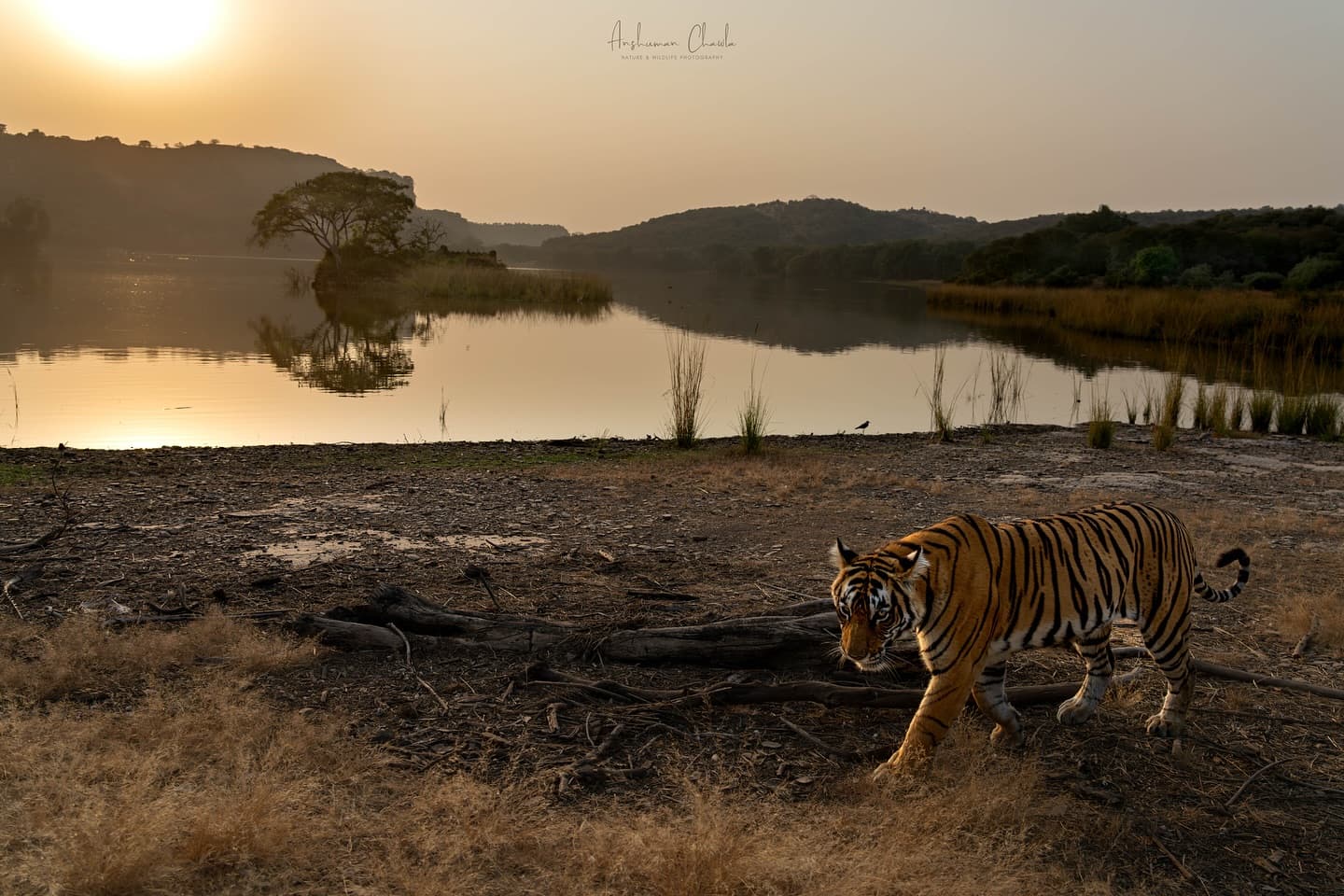
Fauna Diversity

  • 40+ mammal species including tigers, leopards, and sloth bears.
  • 300+ bird species, both resident and migratory.
  • Diverse reptiles including marsh crocodiles and pythons.
  • Rich insect life supporting the forest's food web.
Colourful birdlife in Ranthambore National Park

1. A Rich Ecosystem in a Semi-Arid Landscape

Although Ranthambhore lies within the semi-arid zone of north-western India, it supports an exceptionally rich diversity of wildlife. Its forests, grasslands, wetlands, rocky hills and seasonal streams together create a mosaic of habitats that sustains a remarkable variety of life.

Lake and wetland habitat in Ranthambhore

2. Rivers and Wetlands: The Lifeline of Ranthambhore

The network of rivers—including the Chambal, Banas, Morel, Kalisil, Chakal, and Kanduli—along with streams, lakes such as Rajbag, Padam, Malik, Mansarovar, Gilai Sagar, Kalisil, Guda, and Devpura, and numerous wetlands is vital to the Ranthambhore landscape. These interconnected water systems recharge lakes and waterholes, sustain forests and grasslands, and provide essential habitats for wildlife.

3. Mammalian Diversity

A total of 61 species of mammals have been recorded in Ranthambhore. These include: Bengal Tiger, Leopard, Sloth Bear, Striped Hyena, Indian Wolf, Caracal, Golden Jackal, Nilgai, Sambar, Chital, Wild Boar, Chinkara.

4. Reptiles and Amphibians

A total of 63 species of reptiles have been recorded in Ranthambhore, including the Mugger Crocodile, Indian Python, Indian Cobra, and Monitor Lizard, along with numerous other species of snakes, lizards, and turtles. During the monsoon, temporary pools and wetlands become important breeding habitats for amphibians. Eight species of amphibians have been recorded from the area so far.

5. Butterflies and Insects

Ranthambhore supports a rich diversity of insects, including 73 recorded species of butterflies. Butterflies play an important role as pollinators and contribute to the health and functioning of the ecosystem.

6. A Paradise for Birdwatchers

A total of 355 bird species have been recorded in Ranthambhore, making it one of Rajasthan's finest birdwatching destinations. Its lakes, marshes, cliffs, scrub forests and open grasslands provide diverse habitats for both resident and migratory birds.

7. A Diverse Plant Community

Around 540 species of flowering plants, shrubs, climbers, grasses, and trees have been documented from the Ranthambhore landscape, including 76 species of grasses. However, this is not an exhaustive list, and many more species remain to be documented and included.

Dry deciduous forest vegetation in Ranthambhore

Ranthambore animals checklist

A practical field checklist of species visitors commonly hope to see. Presence does not mean a guarantee on any single drive.

Big cats & carnivores

  • Royal Bengal Tiger
  • Leopard
  • Striped hyena
  • Jackal
  • Jungle cat / caracal (rare)

Herbivores

  • Chital (spotted deer)
  • Sambar
  • Nilgai
  • Chinkara
  • Wild boar

Other mammals

  • Sloth bear
  • Langur
  • Common mongoose
  • Palm civet

Reptiles & wetlands

  • Marsh crocodile (mugger)
  • Monitor lizard
  • Python (occasional)

Birdlife highlights

  • Painted stork
  • Kingfishers
  • Crested serpent eagle
  • Indian peafowl
  • Vultures (where still present)
  • 300+ species recorded across seasons

Flora Species Guide

Ancient banyan tree in Ranthambore forest

Banyan Tree

Ficus benghalensis

One of India's second-largest banyan trees can be found in Ranthambore. These magnificent trees provide shelter to numerous bird species and often become gathering points for wildlife.

Dhok forest landscape in Ranthambore

Dhok Tree

Anogeissus pendula

Covering more than 80% of the forest, dhok is the dominant tree of Ranthambore. Its leaves are a key food source for herbivores, and the species is well adapted to the region's arid conditions.

Pale-barked tree in Ranthambore woodland

Indian Ghost Tree

Sterculia urens

Known locally as Kullu, this tree has a pale, ghostly appearance. It sheds bark each year to reveal a smooth white surface that appears to glow under moonlight.

Flowering tree in Ranthambore spring landscape

Flame of the Forest

Butea monosperma

This deciduous tree produces vibrant orange-red flowers during spring, creating a striking contrast against the dry landscape and attracting pollinators.

Fauna Species Guide

Royal Bengal Tiger in Ranthambore National Park

Royal Bengal Tiger

Panthera tigris tigris

The apex predator of Ranthambore, each tiger can be identified by a unique stripe pattern. These majestic cats are often spotted near water bodies.

Leopard on rocky terrain in Ranthambore

Leopard

Panthera pardus

Elusive and adaptable, leopards favour rocky outcrops and denser cover. Sightings are less frequent than tigers but remain one of Ranthambore's great rewards.

Sloth bear foraging in Ranthambore forest

Sloth Bear

Melursus ursinus

These shaggy-coated bears specialise in feeding on termites and ants. Powerful claws help them tear open termite mounds before sucking up insects with their elongated snout.

Sambar deer in Ranthambore woodland

Sambar Deer

Rusa unicolor

The largest deer species in the Indian subcontinent, sambar is an important prey species for tigers and a reliable alarm caller when predators are nearby.

Marsh crocodile basking at a Ranthambore lake

Marsh Crocodile

Crocodylus palustris

Also known as mugger crocodiles, these reptiles are often seen basking along Ranthambore's lakes and can grow up to 4–5 metres in length.

Chinkara gazelle in Ranthambore buffer zone

Chinkara

Gazella bennettii

Indian gazelle — shy and rare, adapted to the park's open savannah buffer zones.

Wild boar near a Ranthambore lake

Wild Boar

Sus scrofa

Frequently spotted near lakes — robust populations rooting through undergrowth year-round.

Carnivore species in Ranthambore rocky terrain

Caracals & Striped Hyenas

Caracal caracal & Hyaena hyaena

Caracals are identified by their distinctive ear tufts, while striped hyenas are nocturnal scavengers with remarkable jaws strong enough to crush bones.

Small mammals in Ranthambore forest

Jackals & Indian Civets

Canis aureus & Viverra zibetha

Golden jackals are opportunistic omnivores, while the palm civet is a nocturnal mammal with a distinctive mask-like facial pattern.

Honey badger habitat in Ranthambore woodland

Honey Badgers

Mellivora capensis

Known for their fearless nature, honey badgers have thick skin that's nearly impervious to animal bites and stings. They're among the most resilient creatures in the park.

Painted storks and wading birds at a Ranthambore lake

Painted Storks

Mycteria leucocephala

These colorful wading birds gather at Ranthambore's lakes, where they can be seen performing elaborate courtship displays during breeding season.

Birdlife around Ranthambore's wetlands

Kingfishers & Vultures

Alcedo atthis & Gyps bengalensis

Several kingfisher species add vibrant flashes of color to the park, while vultures play a crucial ecological role as nature's cleanup crew.

Wildlife FAQs

What animals can I see in Ranthambore besides tigers?
Leopards, sloth bears, sambar, chital, nilgai, wild boar, marsh crocodiles, langurs, and a rich bird community are all part of the park. Many visitors remember alarm calls and lake birds as much as big-cat sightings.
Are there leopards in Ranthambore?
Yes. Leopards use rocky outcrops, denser cover, and quieter trails. They are more elusive than tigers and often seen at dawn, dusk, or in buffer-zone country.
What is the dominant forest type?
Dhok (Anogeissus pendula) dominates much of the dry deciduous forest, shaping shade, browse, and the open visibility that makes Ranthambore distinctive among Indian tiger reserves.